Understand
What is the actual problem? Technical status, requirements, organisation, stakeholders, dependencies and risks have to become visible first.
About
cofortytwo® is intentionally lean.
How we work
What is the actual problem? Technical status, requirements, organisation, stakeholders, dependencies and risks have to become visible first.
Complexity has to become manageable. We create clarity around goals, responsibilities, interfaces, priorities and next steps.
Technically possible does not automatically mean sensible. We assess options, impact and risk so that decisions can be made on a solid basis.
Our work does not end with a presentation. Where needed, we stay with the project, take operational responsibility and bring in additional specialists.
Clients work directly with the people who are relevant to the problem at hand.
Depending on the project, we add experienced specialists from our network, including people with backgrounds in MedTech, Healthcare, Aerospace, Avionics and industrial development.

Operations & Healthcare Practice Management
Marlen combines business organisation with practical experience in setting up and operating medical practices.
For almost ten years, she has been closely involved in practice setup and practice management and knows the organisational and administrative realities of day-to-day operations first-hand.
She also brings extensive experience from leading and organising a real-estate business.
At cofortytwo®, she is responsible for commercial and operational organisation and brings the practical healthcare perspective into the work.
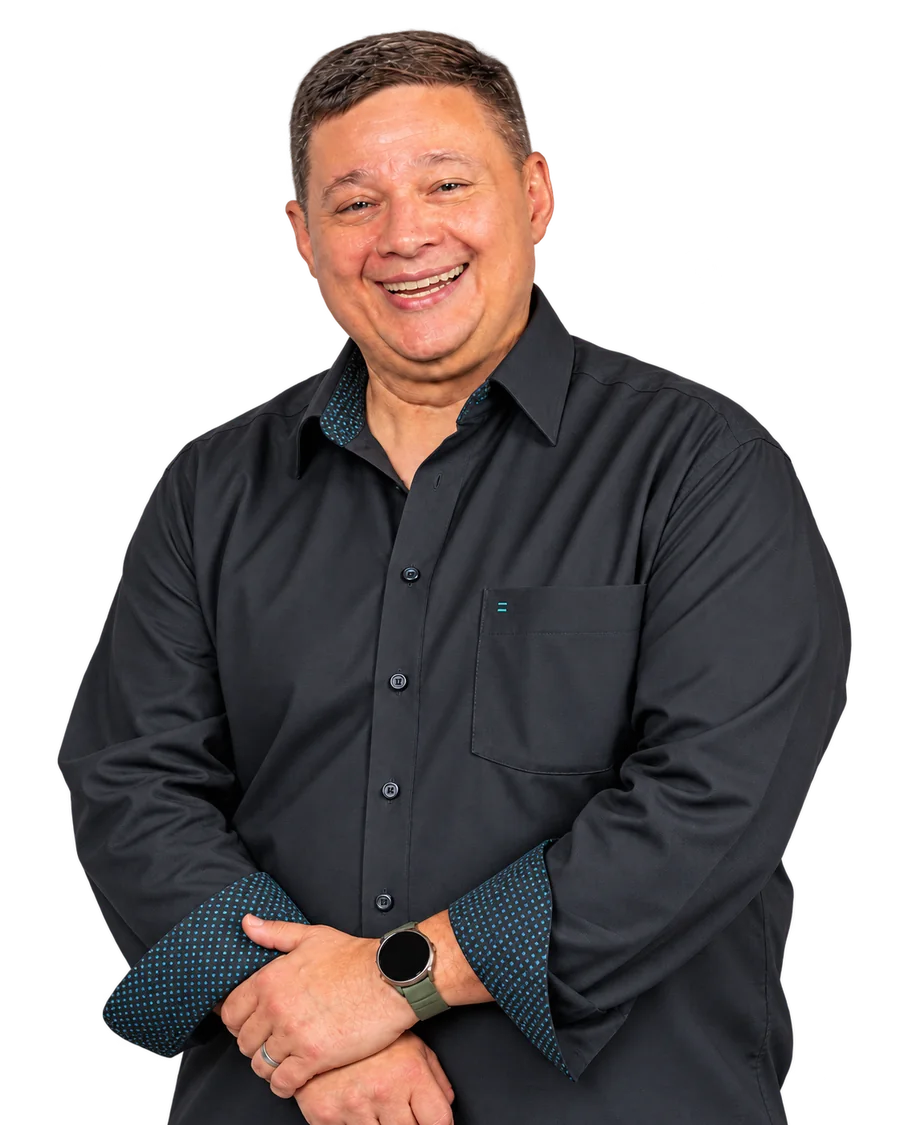
Engineering Project Leadership · Technology Advisory
More than 25 years of experience in international hardware, software and development programmes, particularly in regulated, safety-critical and technically demanding environments.
His work focuses on engineering project management, project recovery, requirements, risk management, HW/SW integration, team building and collaboration with international development organisations, suppliers and stakeholders.
A recurring theme is restoring structure and execution when technical complexity, organisational pressure or disconnected disciplines begin to pull a project apart.
What shaped us
There was an earlier company operating under the cofortytwo® name.
At the time, we relied too heavily on announced project starts and commitments that were never secured with binding agreements.
As a technically driven business, we underestimated the commercial risk that came with that.
In hindsight, there was too much trust and not enough commercial protection.
The consequences were serious. The application to open insolvency proceedings was dismissed for lack of assets, which ultimately led to the former GmbH being removed from the commercial register.
We do not hide that part of our history. What matters to us is what we learned from it — and what we changed.
Trust belongs in business. Commitments belong in contracts.
That is why cofortytwo® is deliberately structured differently today.
Marlen Hesse is responsible for commercial and operational organisation, bringing the business discipline that did not have enough weight in the previous structure.
Michael “Mac” Fink focuses on engineering, technology and technical projects.
Together, those roles bring together two perspectives a technical business needs at the same time:
technical responsibility and commercial discipline.
The experience, the brand and our standards remain.
What changed is the structure, the distribution of responsibility and the way we make business decisions.
Why cofortytwo?
The “co” stands for what shapes the way we work:
cooperation, consulting and collaborative work.
Complex technical problems are rarely solved by one person or one discipline alone.
The 42 is our nod to Douglas Adams’ The Hitchhiker’s Guide to the Galaxy.
Deep Thought is asked for the Answer to the Ultimate Question of Life, the Universe and Everything.
After millions of years, the answer is: 42.
The joke is not that the computer failed. A perfectly computed answer is still of little use if the problem has not been understood precisely enough and the right question has not been established.
That idea fits the way we approach technical work.
In complex engineering projects, the real work rarely starts with a quick answer.
It starts by switching on your brain, understanding the problem and asking the right question.
Ask the right questions together. Build answers that actually work.